


Proper lighting is an important aspect in every musician and music enthusiast’s life.
Whether reading sheet music, adjusting equipment settings, or simply setting the scene for performance, a single light going out in your music space throws off your creative flow and practice routine. Use this guide to learn how to troubleshoot and repair common studio, practice, and performance area lighting problems.
Light in Musical Environments: The Impact
However, the right lighting does not only help you see; it creates atmosphere and can really affect your experience of music. Professional recording studios thoughtfully design their lighting to create the right mood for their artists while ensuring technical areas are well lit. Home studios and practice rooms similarly benefit from the same considerations.
Different musical activities require different lighting solutions.
While reading sheet music requires bright, focused lighting, the performance areas may require dynamic adjustable options to change with the mood of the music. Determine your specific needs, and that will lead you to optimum music environment creation.
Before going into detailed solutions, first identify exactly what’s happening with your light. Each symptom points to different causes and possibly different solutions:
- Completely dead light: This might indicate a power problem or a burnt-out bulb that could, itself, stop a recording session or practice.
- Flickering lights: Commonly denote loose connections or incompatible dimmer switches, which give a lot of trouble in recordings; they may introduce visual distraction and sometimes even electrical noise into sensitive audio equipment.
- Dimmed lighting: It may point to voltage problems or incorrect types of bulbs, which then can lead to difficulties in reading sheet music or setting the equipment properly.
- Buzzing from light fixtures: Can be picked up by microphones during recording and ruin otherwise perfect takes.
Step-by-Step Solutions for Each Lighting Problem
For a completely dead light in your music space:
- First, check your circuit breaker panel for tripped switches, which are usually caused by power-hungry amplifiers or equipment.
- Now, several times, turn the light switch on and off.
- If the above steps don’t work, there might be a problem with the wiring hidden somewhere; in that case, call an electrician.
For flickering lights affecting your music sessions:
- Make sure the bulb is screwed in tightly.
- Ensure that you are using the correct type for your fixture
- Check for loose wiring connections at the switch and fixture
- Look for signs of circuit overload-common in areas with several electronic instruments.
For stage lighting or performance space issues:
- Check all the connections and power sources
- Test whether DMX cables and controllers are operating properly
- Power conditioning equipment operates to stabilize voltages.
- Mount the LED light bars properly and make the correct electrical connections to avoid shadowing or uneven lighting.
Lighting Solutions for Tour Vans and Buses

For the touring musician, lighting in the travel vehicle is just as important as in permanent music space. The tour van or bus will often be serving multiple functions: transportation, sleeping quarters, rehearsal space, and even a last-minute recording studio. Here’s how to address any lighting issues peculiar to mobile music environments:
Common Tour Vehicle Lighting Challenges:
- Limited power supply when not connected to shore power.
- Vibration causes bulbs to either loosen or fail prematurely.
- Cramped spaces require strategic lighting placement.
- Need for both task lighting and ambient options
Mobile Light Fault Diagnosis:
- Inconsistent lighting: Power stabilizers regulate voltage fluctuations when running off of generators or external power sources.
- For lighting whose effect is to create unwanted reflections during night driving:
- Place and orient interior LED visor light bars in such a way that no glare is present on the dashboard.
- For power-efficient lighting, replace traditional bulbs with vehicle application 12V LED fixture designs.
Recommended Tour Vehicle Lighting Upgrades
- Rechargeable, battery-powered LED lights for rehearsals and backstage prep when shore power isn’t available.
- Flexible, adhesive LED strip lighting resistant to vehicle vibration.
- Night mode-red light options that allow the driver to retain night vision while others can work.
When Professional Help Is Needed
While many lighting problems can be diagnosed and repaired by you, others will require professional intervention. Burning smells, buzzing-noises that could interfere with recordings-and repeated tripping of the circuit breaker when you turn on the light are all reasons to call an electrician.
Cost of Repairing Various Light Problems in Music Spaces
Depending on what is causing the problem, the cost of repairs can range from extremely reasonable to wildly expensive. Replacing a bulb-which you can buy for $2-$10-or installing a new switch-$5-$15 yourself-is a pretty low-cost DIY solution. Even when hiring an electrician to replace a light fixture, costs usually run $100-$250.
However, the more complex problems can be much more expensive. Rewiring a circuit may cost $200-$500, while whole-house voltage issues may be $500-$2,000 or more to fix.
In professional music venues or recording studios, special lighting systems may require expert installation and can be very expensive but will provide the precision in control so important to performances.
Lighting Upgrades for Musicians
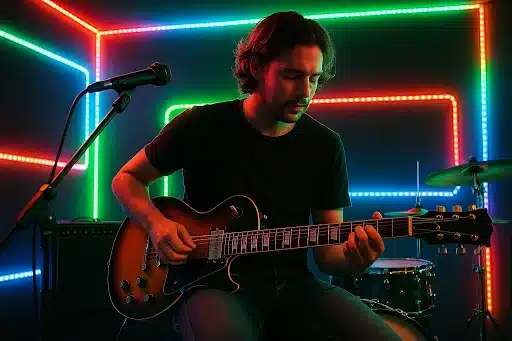
Of course, correcting old lighting issues is important, but for most musicians, improving lighting elevates their music experience:
- Desk lamps with adjustable arms: Provide concentrated light for reading sheet music or making adjustments to equipment
- Stage lighting: Even small-scale options can turn practice spaces into performance spaces.
Conclusion
Before you attempt any electrical repairs, be honest about your comfort level with doing your own electrical work. If this is merely a bulb replacement, the above steps can be followed. However, if you recognize any of these signs of serious electrical issues, immediately call a licensed electrician.
Your safety – and your valuable musical equipment – is worth more than the money you might save trying to fix it yourself.

- N1NJA & Nana Atta Make a Strong Afrotech Statement with ‘Umusa’ - December 13, 2025
- Fritz Kalkbrenner Delivers a Melodic Triumph with ‘Calling You’ - December 12, 2025
- Whisnu Santika Drops Emotional Single “I’ll Be Yours” - December 12, 2025